
The Engineering Foundation of uST: Safety, Advanced Technologies, and Solutions to Urban Challenges
05 January 2026
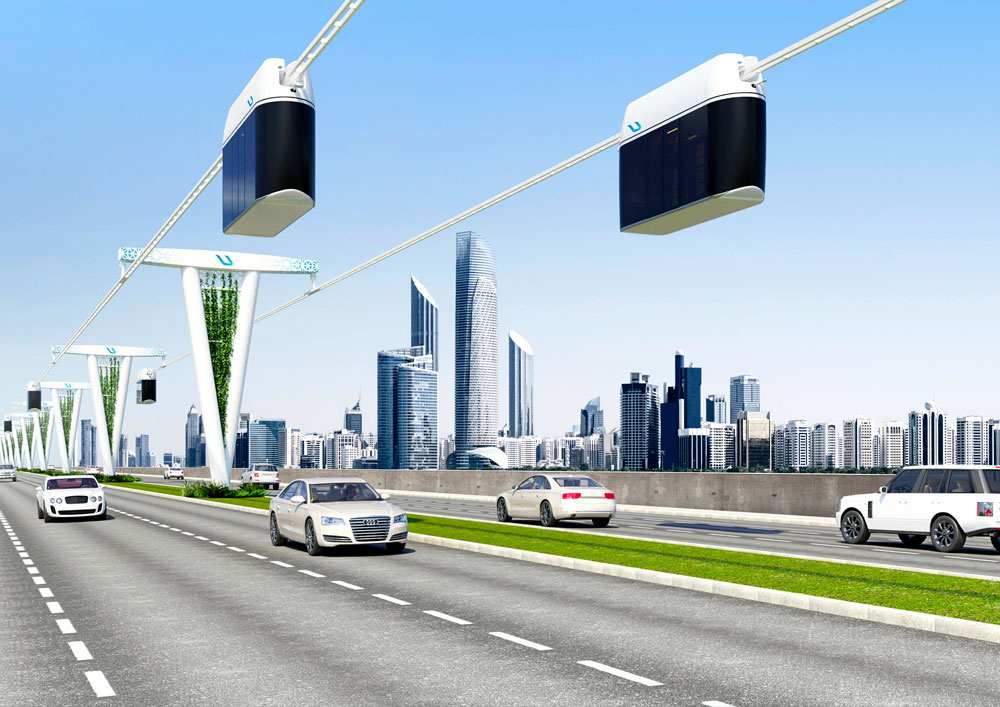
Modern cities and economies are increasingly dependent on transport that must be not only fast and autonomous, but above all safe and reliable. This demand defines the philosophy behind the uPod — a transport solution in which safety is embedded at the design stage, in materials, structures, and control logic. For the engineers at Unitsky String Technologies Inc., safety is not an additional feature, but the foundation of the entire system, engineered for stable operation under real-world conditions.

A key role is played by the track and running-gear architecture. The uPod operates on a string-rail viaduct where loads are evenly distributed, reducing the risk of deformation and loss of stability. The running gear grips the rail from multiple sides, ensuring stable movement even under lateral wind speeds of up to 35 m/s. Independent suspension smooths vibrations and maintains ride comfort, while the track structure itself is designed with an increased safety margin relative to calculated loads.
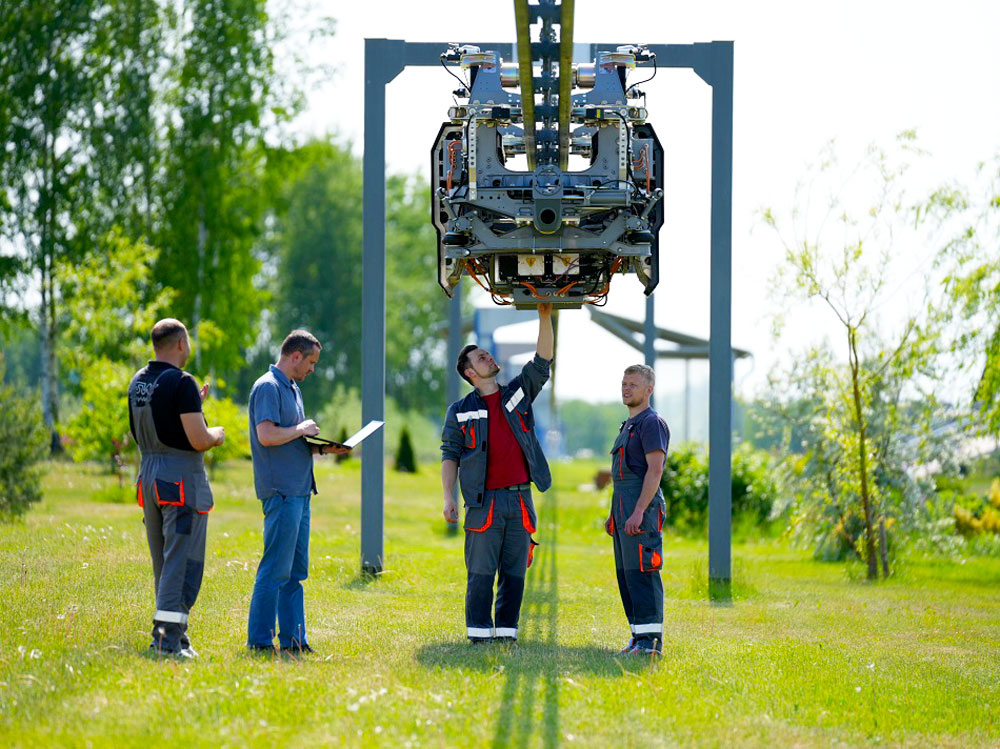
Reliability is further enhanced by the vehicle body, made of composite materials and aluminum alloys that combine low weight with high mechanical strength. Impact tests have confirmed that the passenger module frame maintains its integrity in a collision at a speed of 25 km/h — a level comparable to automotive safety standards. These results demonstrate the technology’s readiness for real urban operation.
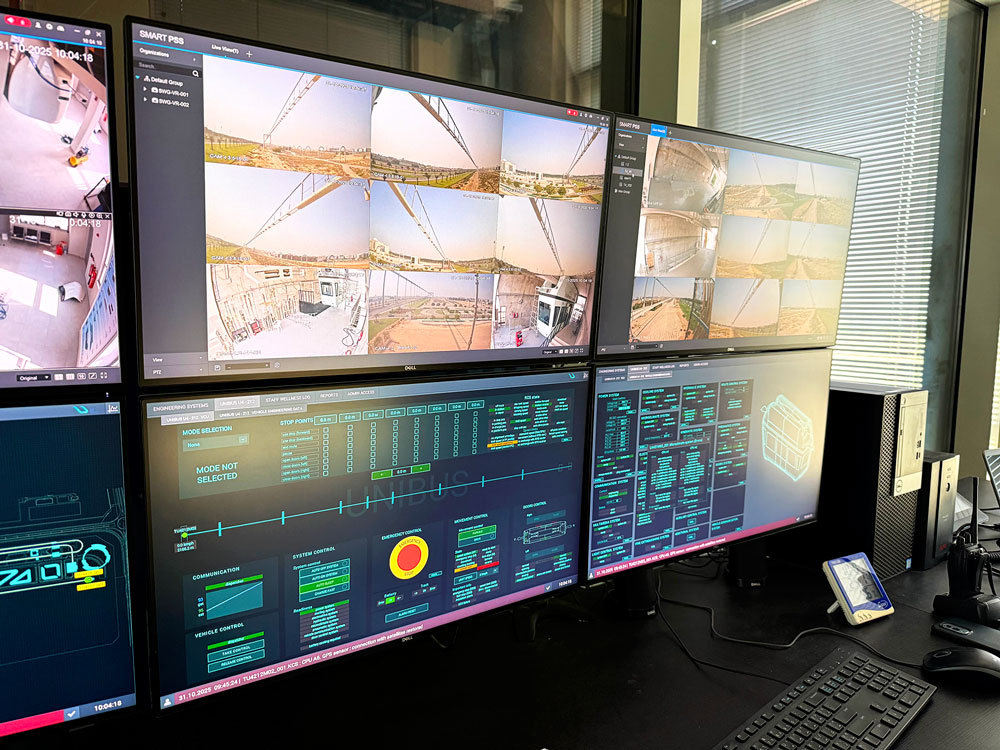
The onboard control system manages movement, power supply, and communication with the dispatch center, while the automatic situational control system continuously analyzes speed, acceleration and braking cycles, body tilt angle, battery condition, component temperatures, and the presence of obstacles along the line. When a threat is detected, the uPod independently reduces speed, activates emergency braking, or stops at a predefined point. Even in the event of lost communication with dispatch, it continues operating autonomously and completes the route in a safe zone.

The braking system is built on the principle of independent circuits. Service braking is implemented as an electromechanical process with energy recuperation, increasing efficiency and reducing wear. The emergency brake operates autonomously and is capable of stopping the vehicle even in the event of electronic system failure. All critical subsystems — power supply, communication, and positioning — are duplicated, ensuring uninterrupted operation.
In an environment where cities calculate the cost of every minute of downtime and reputational risk, such architecture transforms the technology from an “interesting concept” into a practical tool for reliable infrastructure.
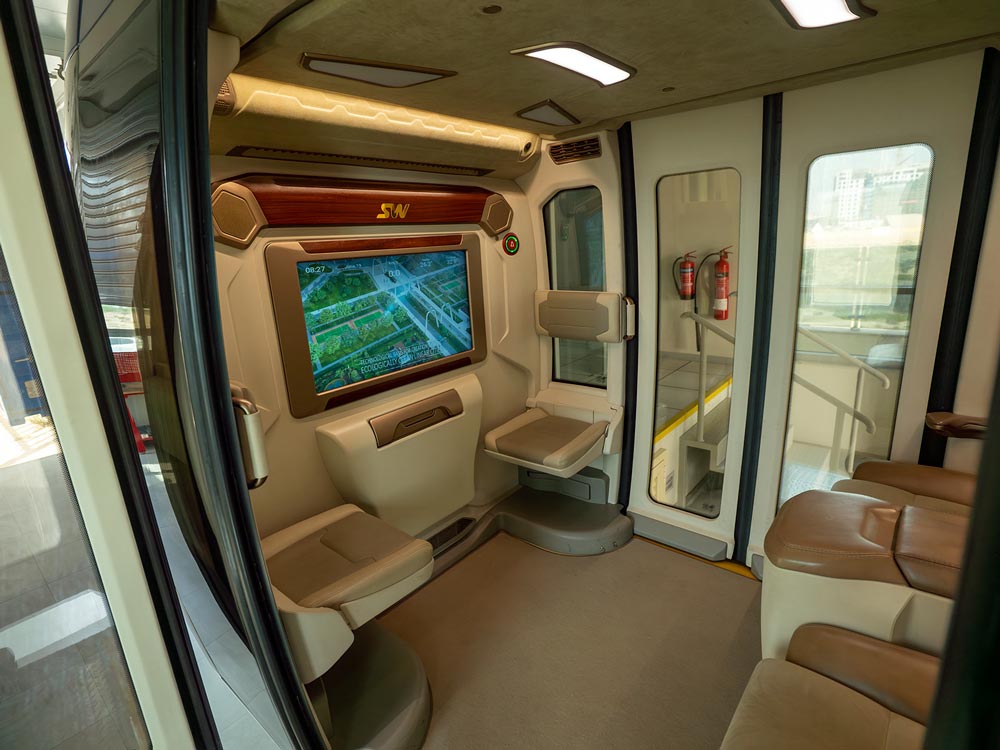
Comfort and safety are closely interconnected. The cabin is equipped with climate control and intelligent lighting that adapt to passenger numbers and ambient temperature. Cameras and microphones provide communication with dispatch, while movement is only possible when doors are properly closed. In emergency situations, manual door-opening mechanisms and emergency lighting are provided.
This approach is valuable because it combines smart technologies with simple, reliable mechanical solutions — exactly how systems designed for mass use and a long service life are built.
Before testing at proving grounds in Belarus and the UAE, each uPod undergoes computer-based load simulations and laboratory tests for resistance to vibration and temperature fluctuations.
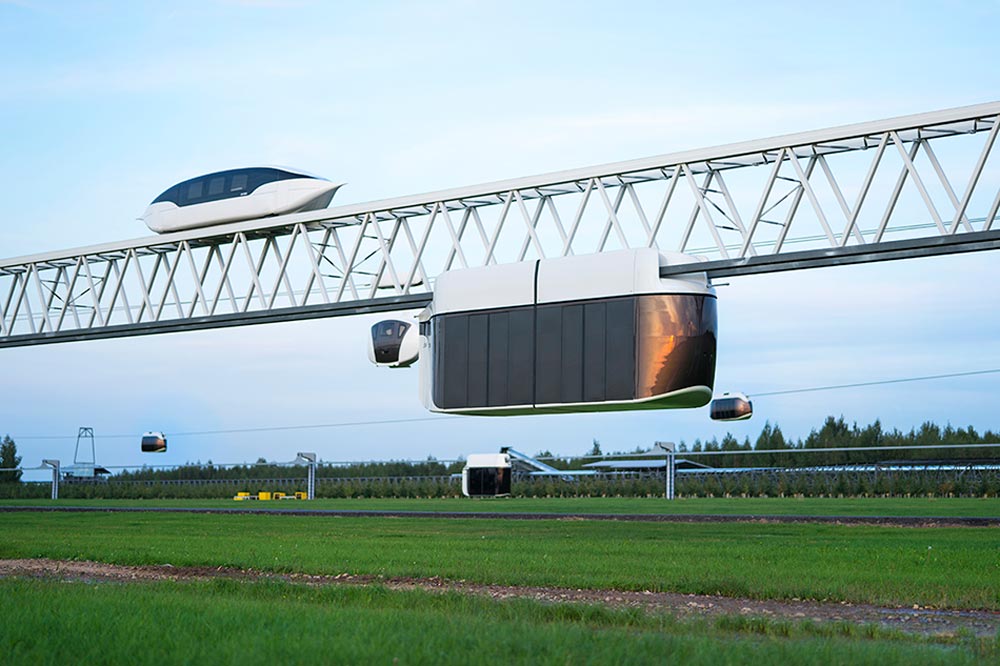
As a result, uPod safety is not a single “strong feature,” but the sum of thousands of engineering decisions united by one principle: speed must never come at the cost of risk. String-rail transport responds to a critical need of the modern world — to provide public transportation that is simultaneously autonomous, energy-efficient, and protected against critical failures through thoughtful design, independent braking circuits, system redundancy, and situational control. It is precisely such technologies that are shaping a new investment logic today: capital seeks solutions capable of becoming infrastructure standards rather than one-off innovations — and the more clearly a technology demonstrates safety through data and engineering architecture, the more confident it appears in the long-term development horizon.
This form asks for your consent to allow us to use your personal data for the reasons stated below. You should only sign it if you want to give us your consent.
Who are we?
The name of the organisation asking you for consent to use your information is:
Global Transport Investments
Trident Chambers, P.O. Box 146, Road Town
Tortola
British Virgin Islands
We would like to use the following information about you:
Why would we like to use your information?
Global Transport Investments would like to send this information to company registry, inform you about its news, for refund purposes.
What will we do with your information?
We store your name, address, ID Data, date of birth into company registry. We will share your e-mail & phone number with IT Service (https://digitalcontact.com/), SMS Center (http://smsc.ru). They will add your details to their mailing list and, when it is news update, they will send you an email or sms with details. We store your credit card number for possible refunds.
How to withdraw your consent
You can withdraw the consent you are giving on this form at any time. You can do this by writing to us at the above address, emailing us at the address: [email protected] or by clicking on the unsubscribe link at the bottom of emails you receive.
This privacy notice tells you about the information we collect from you when you sign up to receive our regular newsletter via our website. In collecting this information, we are acting as a data controller and, by law, we are required to provide you with information about us, about why and how we use your data, and about the rights you have over your data.
Who are we?
We are Global Transport Investments. Our address is Trident Chambers, P.O. Box 146, Road Town, Tortola, British Virgin Islands. You can contact us by post at the above address, by email at [email protected].
We are not required to have a data protection officer, so any enquiries about our use of your personal data should be addressed to the contact details above.
What personal data do we collect?
When you subscribe to our newsletter, we ask you for your name and your email address.
Why do we collect this information?
We will use your information to send you our newsletter, which contains information about our products.
We ask for your consent to do this, and we will only send you our newsletter for as long as you continue to consent.
What will we do with your information?
Your information is stored in our database and is shared with with IT Service (https://digitalcontact.com/), SMS Center (http://smsc.ru). It is not sent outside of the Euro. We will not use the information to make any automated decisions that might affect you.
How long do we keep your information for?
Your information is kept for as long as you continue to consent to receive our newsletter.
Your rights over your information
By law, you can ask us what information we hold about you, and you can ask us to correct it if it is inaccurate.
You can also ask for it to be erased and you can ask for us to give you a copy of the information.
You can also ask us to stop using your information – the simplest way to do this is to withdraw your consent, which you can do at any time, either by clicking the unsubscribe link at the end of any newsletter, or by emailing, writing us using the contact details above.
Your right to complain
If you have a complaint about our use of your information, you can contact the Information Commissioner’s Office.

Subscribe to our official Telegram-channel
Subscribe
 Русский
 English
Rate and Comment
You can assess the importance of a particular publication and the level of its preparation. Share your opinion in the comments!